Service guide
Auto Repair Advice from Ebenezer
Practical guides written for drivers in Brentwood, Hyattsville, Mount Rainier, Bladensburg and the rest of Prince George's County. Straightforward explanations of Maryland inspections, maintenance and the symptoms we hear about most, so you know what to expect before you visit.
Filter guides by category
Diagnostics
Pickups: Chain Noise on Startup
If your pickup makes a rattling or "maraca" noise in the engine during the first few seconds after starting, and then it goes away, do not treat it as normal: in Ford F-150s with the 5.4-liter Triton engine and in Chevrolet Silverados with the V8 engine, it is a classic sign of problems in the timing system. In the F-150 the weak point is the "cam phasers" (the camshaft adjusters) and the chain tensioners; in the Silverado, the AFM system that shuts off cylinders ends up damaging the lifters. These are work engines, built to last, but these two systems are their Achilles' heel.
3 min read · Updated November 5, 2026
Read guide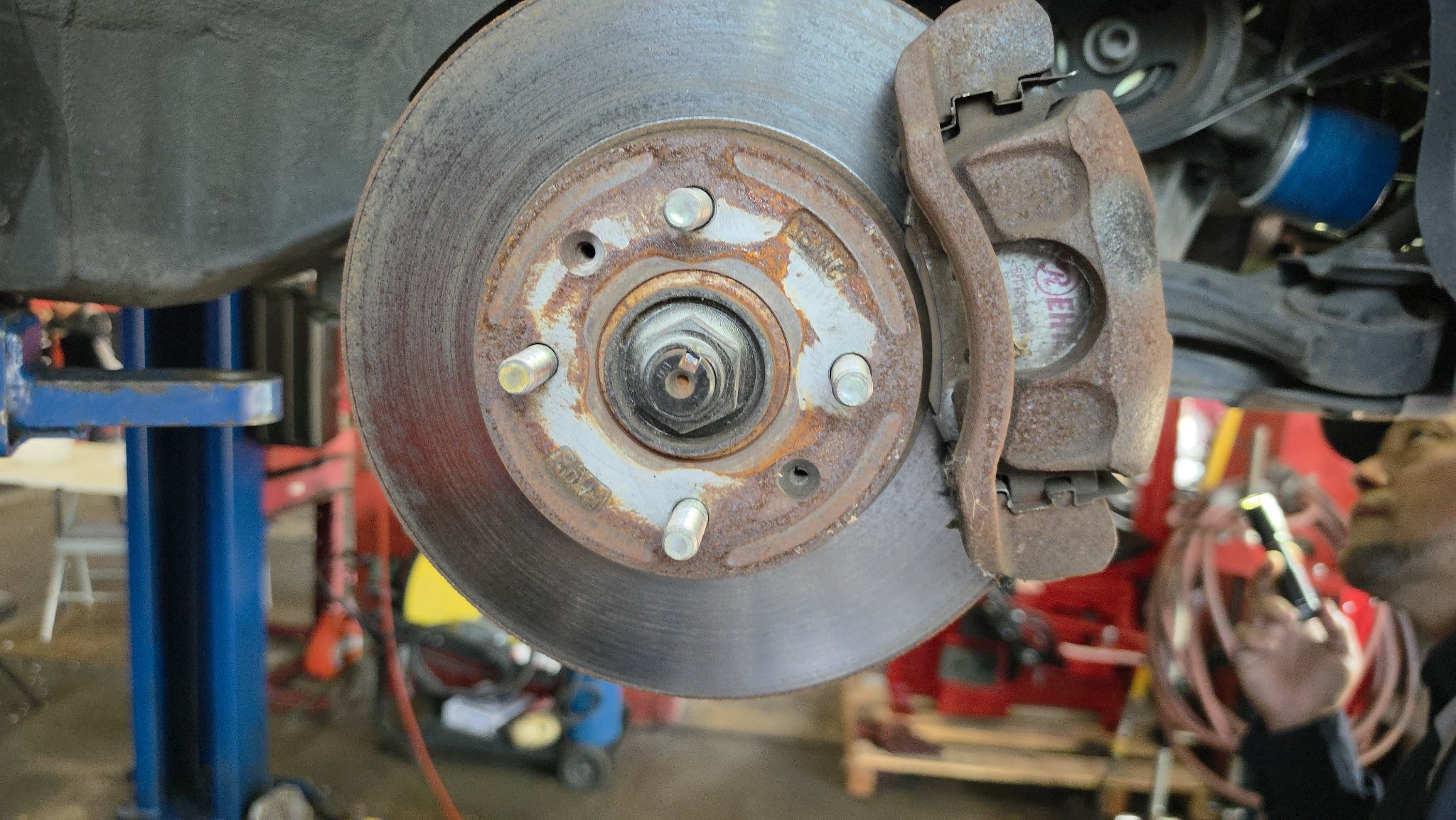
Brakes
Why Does My Steering Wheel Vibrate When I Brake?
If, when braking, especially coming down from 50 or 60 miles per hour, the steering wheel vibrates in your hands or you feel a pulsing in the pedal, the front brake discs (rotors) are most likely warped or have uneven thickness. It is one of the most common brake problems in cars like the Camry, the Accord, the CR-V or the RAV4 after years of use. It is not just an annoyance: it is the brake system's way of telling you it is no longer braking evenly.
3 min read · Updated November 5, 2026
Read guide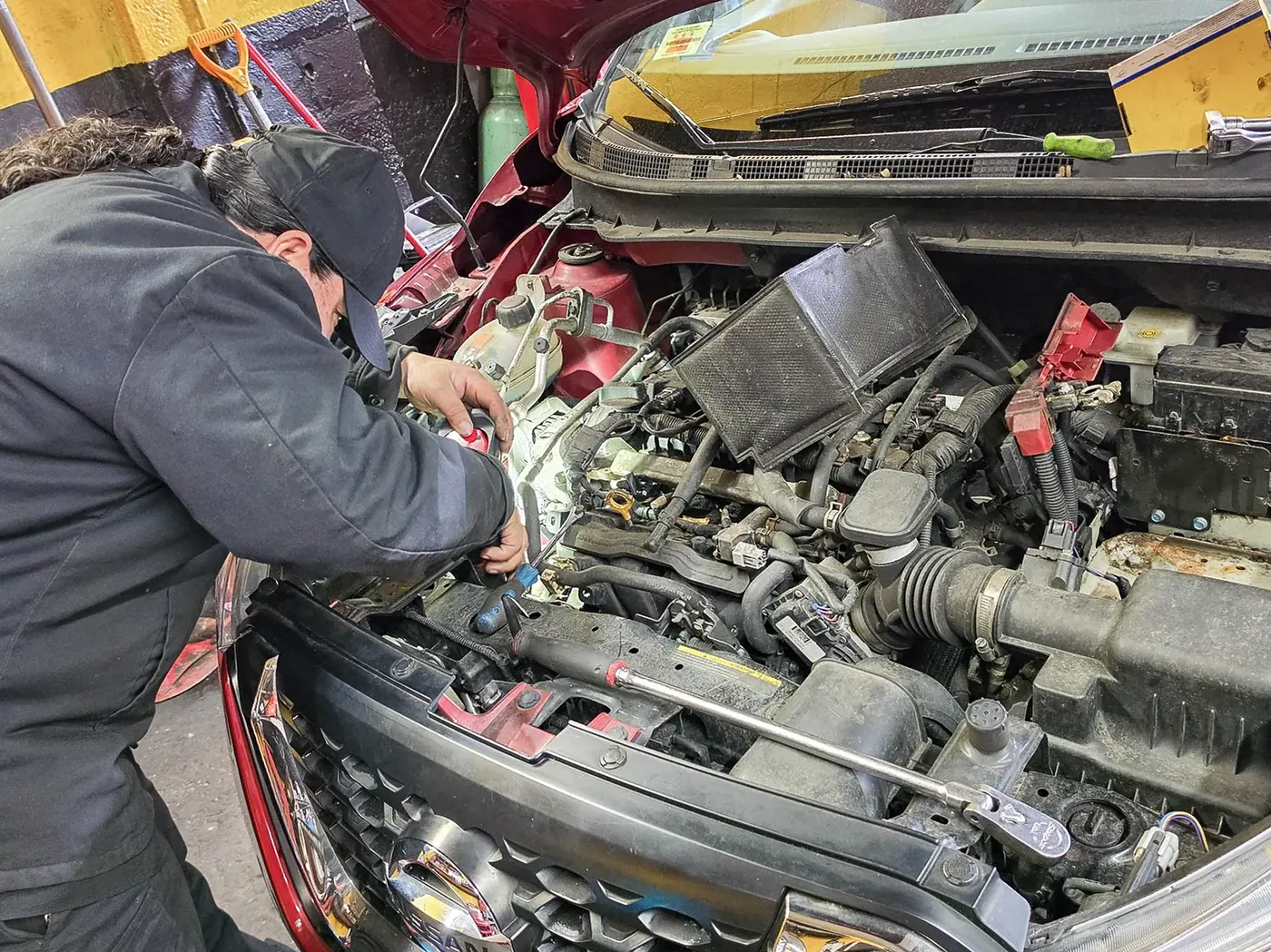
Diagnostics
Check Engine Light On: The Most Common Causes
The check engine light is the one that scares people most and, at the same time, the most misunderstood. When it comes on, your car's computer detected something out of the ordinary and stored a fault code. It can be something as simple as a loose gas cap or as serious as a damaged catalytic converter. What is certain: the light does not tell you what it is, only that the car needs to be scanned. Here we explain the causes we see most at the shop in Toyota and Honda cars 10 to 15 years old.
3 min read · Updated November 5, 2026
Read guide
Maryland Inspection
Why Won't My Car Pass the Maryland VEIP?
VEIP is the emissions test Maryland requires every two years to renew your registration. For gasoline cars from 1996 onward, the main test is electronic: they connect the equipment to your car's computer and check whether there are fault codes and whether the emissions system "monitors" have already run their tests. The number one reason cars do not pass is simple: having the check engine light on is an automatic failure, even if the car drives perfectly. Here are the most common causes and how to avoid them.
3 min read · Updated November 5, 2026
Read guide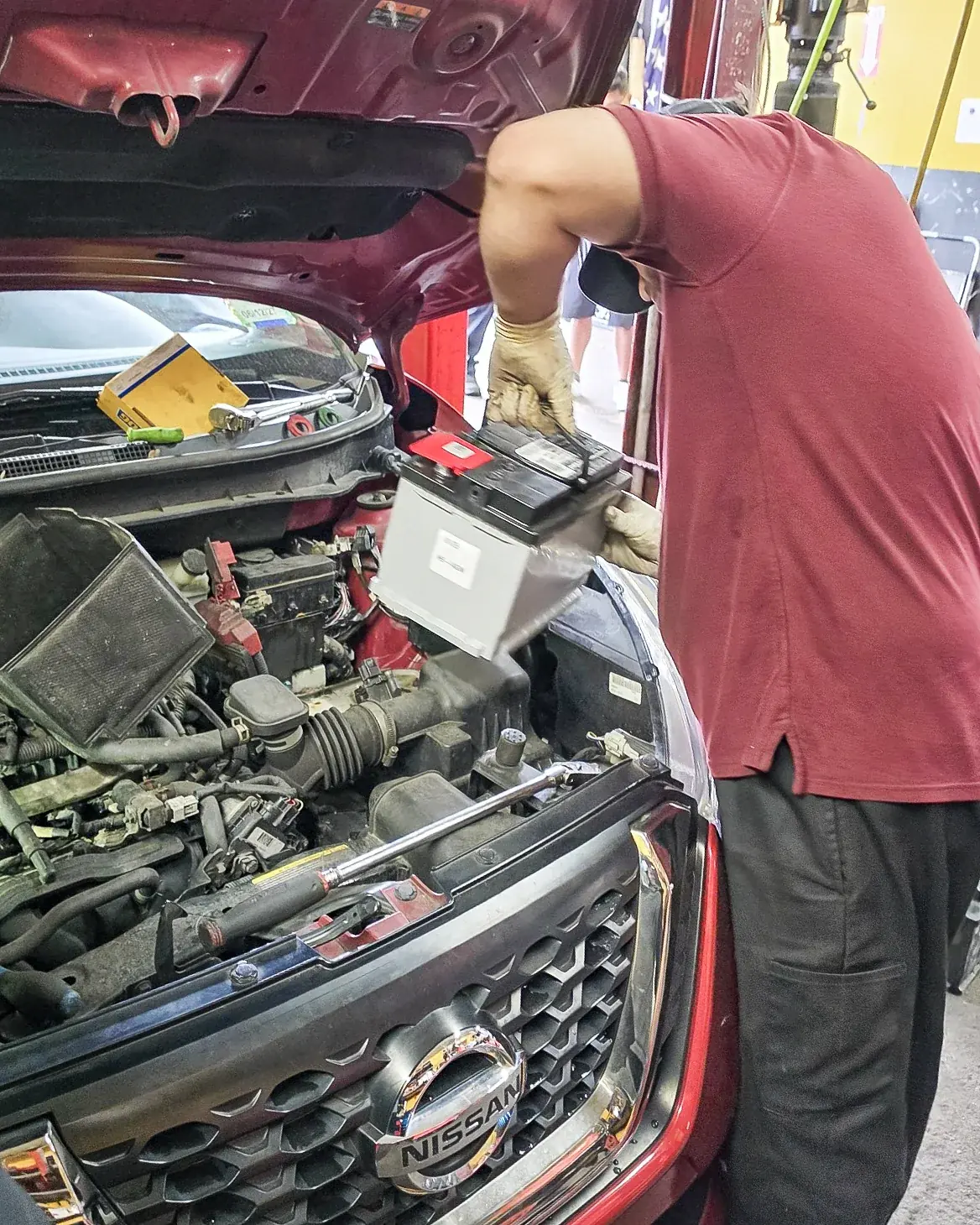
Diagnostics
My Car Won't Start: Battery, Alternator or Starter?
You turn the key and your car does not start. Before calling someone or replacing parts by guesswork, listen carefully to what the car does, because the sound tells you a lot: the usual three suspects are the battery, the alternator (which is what charges the battery) and the starter motor. Each one fails with different symptoms, and learning to tell them apart saves you time, money and getting stranded twice with the same problem.
3 min read · Updated November 5, 2026
Read guide
Maintenance
Why Is My Car's Coolant Going Down?
Your car's cooling system is a closed circuit: coolant does not get "used up" like oil. If the reservoir level goes down, there is a leak somewhere, however small, or the fluid is escaping as vapor through a cap that no longer seals. In cars 10 to 15 years old like the Camrys, Accords, Civics and CR-Vs we see every day, the hoses, the radiator and the water pump already have years of heat behind them, and sooner or later one of them starts to weep. Finding where it is coming from is half the repair.
3 min read · Updated November 5, 2026
Read guideMaintenance
Why Is My Camry Burning Oil?
If you have a 2007, 2008, 2009, 2010 or 2011 Toyota Camry with the 2.4-liter engine (the well-known 2AZ-FE) and you notice you have to add oil between changes, you are not imagining things: it is a well-known problem with that engine. In many cases the car does not drip oil on the ground; it burns it internally, and it can go through as much as one quart of oil every 1,000 miles. The good news is that if you catch it in time and keep the level correct, the engine can keep working for a long time.
3 min read · Updated November 5, 2026
Read guideDiagnostics
Why Is My RAV4 Making a Noise in the Back?
If your 2013 to 2018 Toyota RAV4 with all-wheel drive (AWD) makes a hum, growl or bad-tire-like noise coming from the back, the problem is very likely in the rear differential coupling. It is a known failure in those generations: that part is what engages the rear axle when the computer detects that the front wheels are slipping. When the coupling's internal bearing wears out, it starts making noise long before it stops working.
3 min read · Updated November 5, 2026
Read guide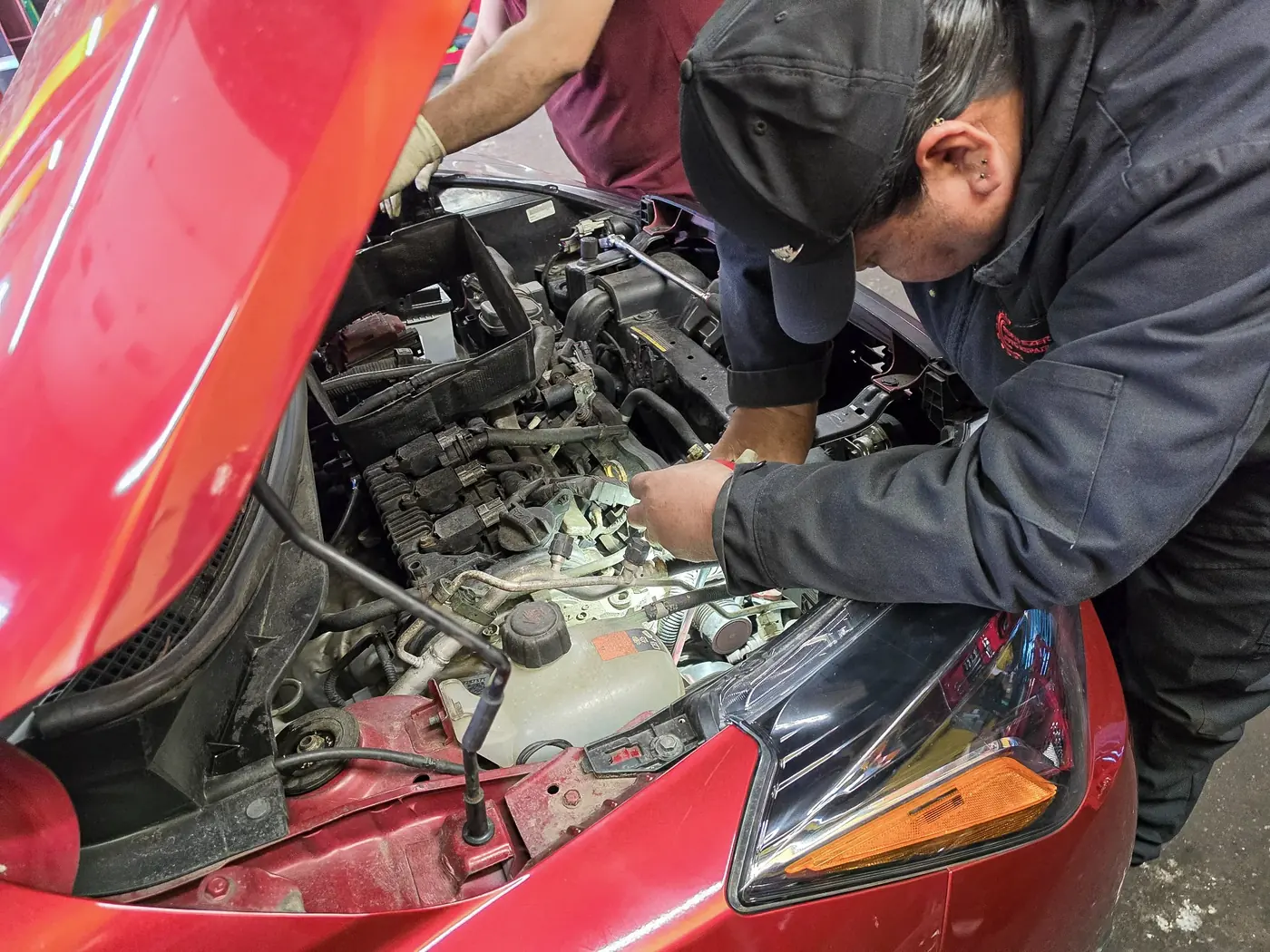
Maintenance
Accord V6: The Timing Belt That Shows No Mercy
If your Honda Accord has the V6 engine — very common in 2003 to 2017 Accords — you should know that this engine does not use a timing chain; it uses a timing belt, and that belt has a limited service life. The belt synchronizes the movement of the pistons with the valves. Honda's V6 is an "interference" engine: if the belt breaks while the engine is running, the pistons strike the valves and the internal damage is severe. That is why we call it the belt that shows no mercy: it does not warn you with noise or clear symptoms before it breaks.
3 min read · Updated November 5, 2026
Read guide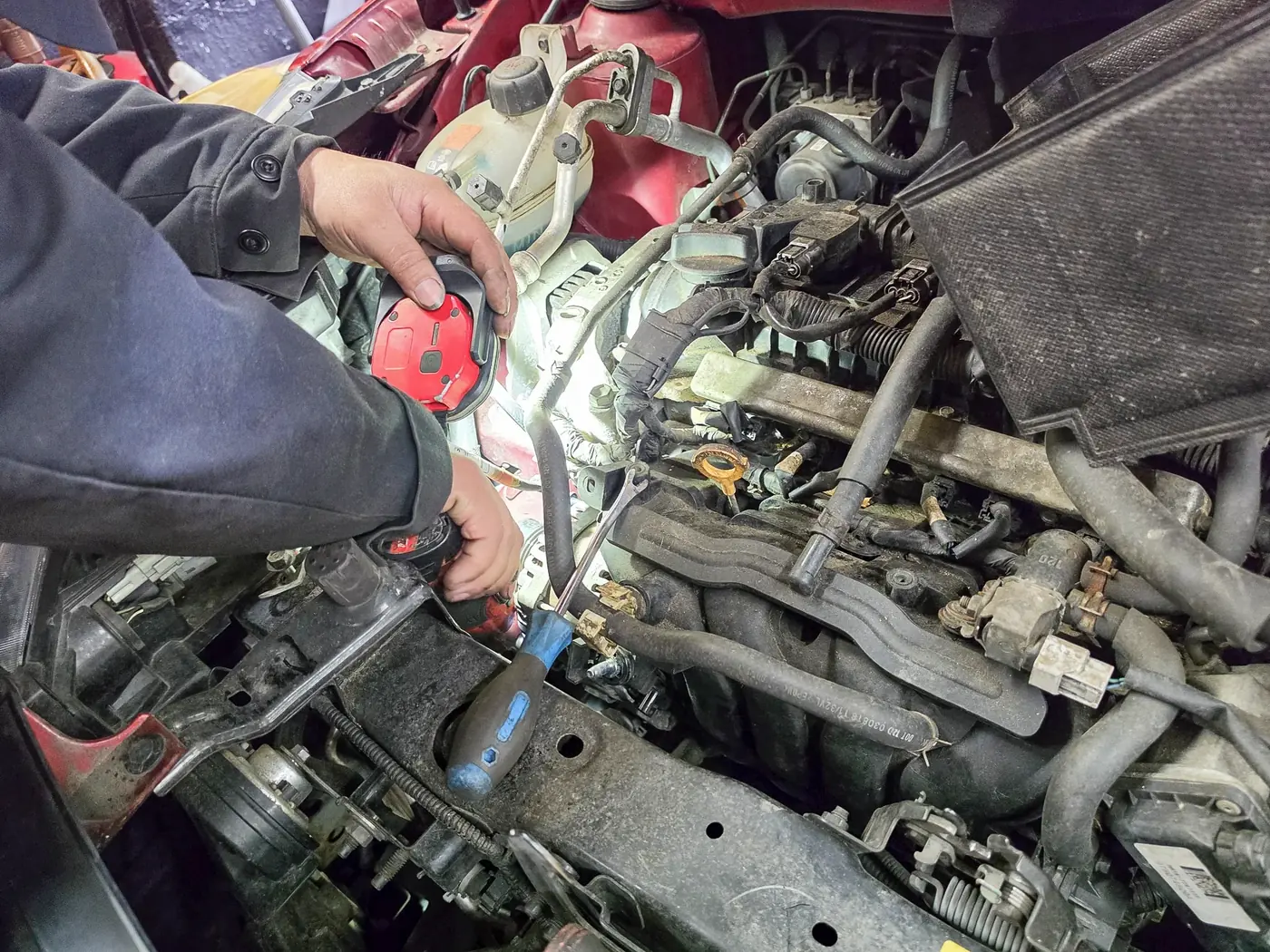
A/C
Why Did My CR-V's Air Conditioning Stop Cooling?
If your Honda CR-V's air conditioning started cooling weakly and ended up blowing hot air, suspect number one is the compressor. In CR-Vs it is a fairly well-known failure, especially with age and mileage: the compressor works hard through Maryland's humid summers and one day it simply stops compressing. Sometimes the problem is just the compressor clutch or a leak, but often it is the entire compressor.
3 min read · Updated November 5, 2026
Read guide
Diagnostics
Civic 2006–2009: Coolant Leak
If you have a 2006, 2007, 2008 or 2009 Honda Civic with the 1.8-liter engine and the coolant level drops without you seeing a clear puddle under the car, you need to pay close attention: those Civics had a known problem with cracks in the engine block. The block is the main part of the engine, and when it cracks, coolant escapes little by little through the crack, sometimes only when the engine is hot and the system is under pressure. That is why many owners keep topping it off without finding the leak.
3 min read · Updated November 5, 2026
Read guide
Diagnostics
Odyssey: Shuddering and Transmission Problems
The Honda Odyssey is the favorite minivan of many families in our area, but its automatic transmissions are its known weak point, especially when the fluid has never been changed. If your Odyssey jerks when shifting gears, vibrates as if you were driving over a cobblestone street at low speed or is slow to engage a gear, it is quite possible the problem starts in the torque converter and the condition of the transmission fluid. The good news: caught in time, it can sometimes be resolved with a fluid service; caught late, the entire transmission suffers.
3 min read · Updated November 5, 2026
Read guide
Maryland Inspection
Common Reasons Vehicles Do Not Pass a Maryland Safety Inspection
A Maryland safety inspection follows state requirements, and only the official inspection determines the result. Checking visible wear, warning signs and basic equipment before your visit can help you arrive better prepared.
6 min read · Updated September 27, 2026
Read guideMaintenance
Seasonal Car Maintenance for Maryland Drivers
Maryland weather asks different things of your vehicle throughout the year. A few focused checks before summer heat, heavy rain and winter cold can help reveal wear before it interrupts your drive.
6 min read · Updated September 27, 2026
Read guideMaryland Inspection
Maryland State Inspection Checklist: What Drivers Should Know
A Maryland safety inspection reviews the equipment that keeps a vehicle safe on the road. Walking through a few items beforehand helps you arrive prepared and avoid a second visit. Final results always depend on the official inspection and current state requirements.
6 min read · Updated September 2026
Read guideDiagnostics
Check Engine Light: What It Could Mean and What to Do
A check engine light means the vehicle stored a fault it wants looked at. A steady light and a flashing light call for very different reactions. Only a proper diagnosis can confirm the cause.
6 min read · Updated September 2026
Read guideBrakes
7 Brake Warning Signs You Should Not Ignore
Brakes almost always warn you before they fail. Knowing which changes matter helps you act while the repair is still small. If braking performance itself has changed, treat it as urgent.
6 min read · Updated September 2026
Read guideDiagnostics
Car Won't Start: Battery, Starter or Alternator?
A no-start is one of the easiest problems to describe and one of the easiest to misdiagnose. The sound the vehicle makes when you turn the key is the most useful clue you can give us. These are pointers, not conclusions.
6 min read · Updated September 2026
Read guideDiagnostics
Engine Overheating: What to Do Safely
Overheating is one of the few car problems where what you do in the next two minutes matters more than the repair itself. Stop safely, shut the engine off and let it cool. Continuing to drive hot can turn a hose into an engine.
6 min read · Updated September 2026
Read guideMaintenance
How Often Should You Change Your Oil?
There is no single correct oil change interval for every vehicle. The right answer comes from your owner's manual, the oil specification your engine requires and how you actually drive. Short city trips count as harder use than highway miles.
6 min read · Updated September 2026
Read guide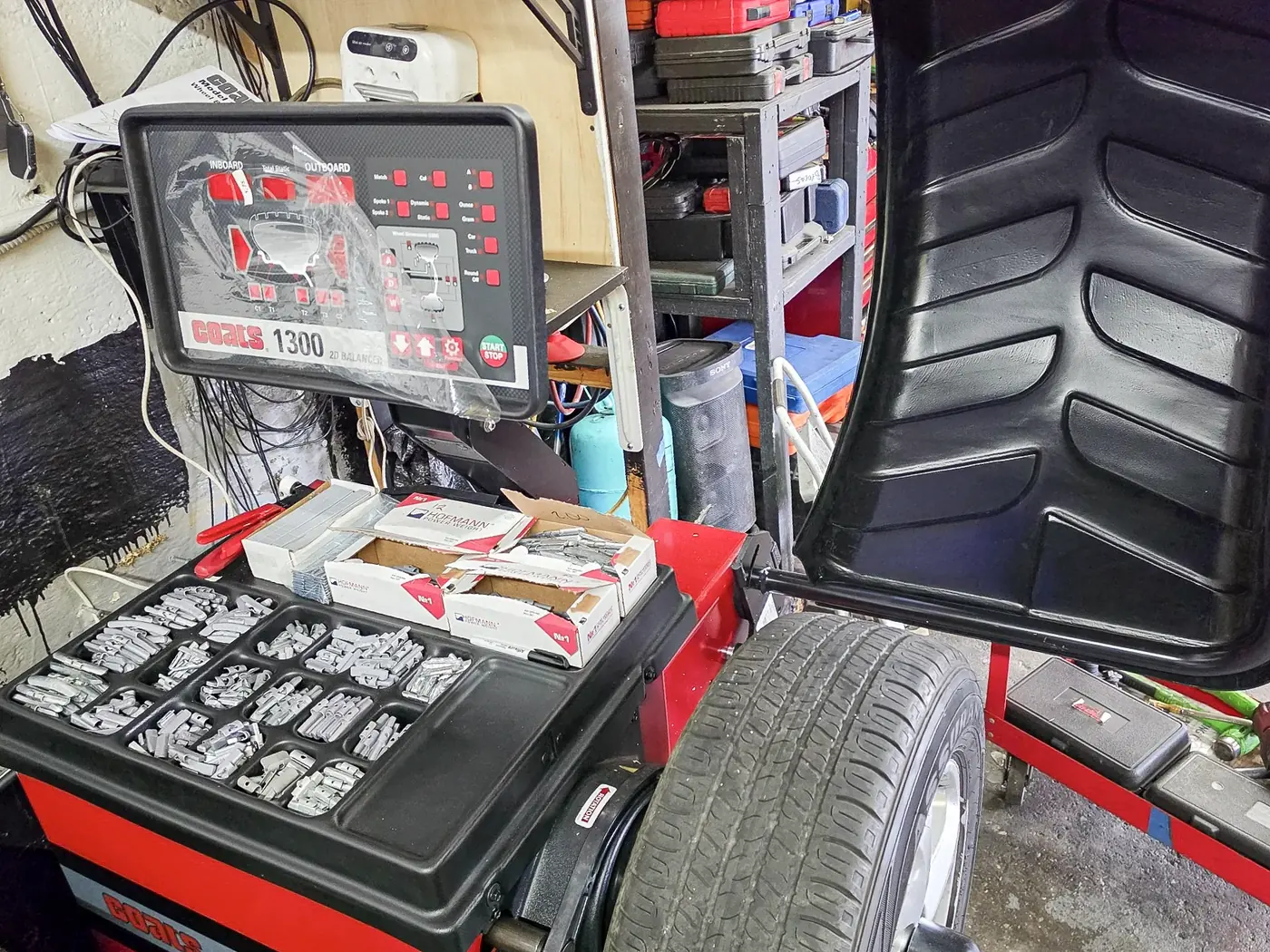
Tires
What Uneven Tire Wear Says About Your Vehicle
Tires record how a vehicle has been driven and how it is aligned. Reading the wear pattern narrows the possibilities quickly, though a pattern is a clue rather than a diagnosis. Checking before a long trip is always worth the ten minutes.
6 min read · Updated September 2026
Read guideA/C
Why Is My Car A/C Not Blowing Cold?
Two very different complaints get described the same way: air that is not cold, and air that barely comes out. Separating them points to different parts of the system. Recharging without finding the leak usually buys a few weeks, not a fix.
6 min read · Updated September 2026
Read guide