Tires · Updated September 2026
What Uneven Tire Wear Says About Your Vehicle
Summary: Tires record how a vehicle has been driven and how it is aligned. Reading the wear pattern narrows the possibilities quickly, though a pattern is a clue rather than a diagnosis. Checking before a long trip is always worth the ten minutes.
On this page
01Reading the pattern
Run your hand across the tread in both directions and look at both shoulders:
- Both outer edges worn, center fine: could indicate chronic underinflation.
- Center strip worn, edges fine: could indicate overinflation.
- One edge only: could indicate alignment angles such as camber or toe.
- Feathered edges you feel in one direction: often associated with toe settings.
- Cupped or scalloped patches: could indicate worn shocks, struts or other suspension components.
- Flat spots in one place: could indicate a braking event or a balance issue.
02Pressure and rotation come first
Before anything mechanical, check pressure when the tires are cold, using the figure on the door placard rather than the number molded into the sidewall. Temperature swings between Maryland seasons move pressure noticeably.
Rotation matters because front and rear positions wear differently. Skipping rotations is one of the most common reasons a set of tires ends its life early with plenty of tread left on two of them.
03Balance and alignment are not the same thing
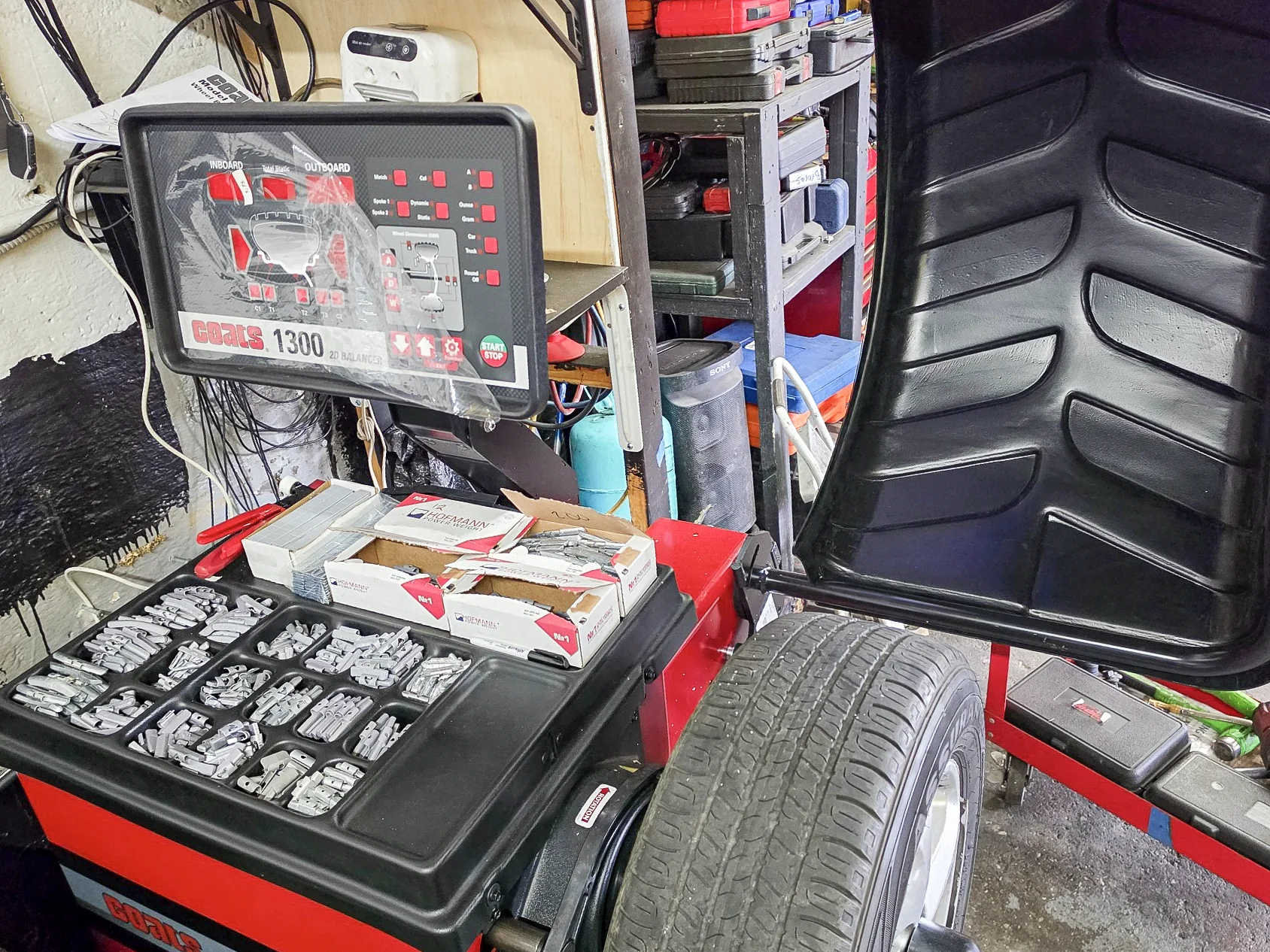
Balancing corrects weight distribution around the wheel and tire; it usually addresses vibration that appears at a specific speed. Alignment sets the angles at which wheels meet the road; it usually addresses pulling and uneven wear.
A vibration that comes and goes with speed, and a steady pull on a flat road, are two different complaints. Describing which one you have saves diagnostic time.
04When tires point to suspension
Cupping, unusual noise over bumps, a floating feeling at highway speed or the vehicle taking longer to settle after a dip can all point to suspension wear. Replacing tires without addressing that returns the same pattern on the new set.
05Before a road trip
Check pressures cold, look for cuts, bulges or exposed cords, confirm the spare holds air and is accessible, and ask for a rotation if you are due. A tire that is questionable in your driveway is far cheaper than one that fails on I-95.
What to tell the shop
- Vibration versus pulling, and at what speed it shows up.
- Which tire or corner looks worn, if you noticed.
- When tires were bought and last rotated, if you know.
- Any curb impact, pothole or accident, even a minor one.
Note: This article is educational. Wear patterns suggest possibilities; a hands-on inspection and measurement confirm the cause.