Diagnostics · Updated September 2026
Car Won't Start: Battery, Starter or Alternator?
Summary: A no-start is one of the easiest problems to describe and one of the easiest to misdiagnose. The sound the vehicle makes when you turn the key is the most useful clue you can give us. These are pointers, not conclusions.
On this page
01Start with the sound
Different no-starts sound different. Listen once, then describe it:
- Slow, labored crank: could point to battery charge, battery age or a connection issue.
- One single click, then silence: could point to the starter or its electrical path.
- Rapid clicking: often associated with low voltage reaching the starter circuit.
- Cranks normally but never fires: points away from battery and starter, toward fuel, spark or a sensor.
- Nothing at all, no lights, no chime: could point to a dead battery or a loose main connection.
- Started fine, then died while driving: charging system is worth checking first.
02What each part actually does
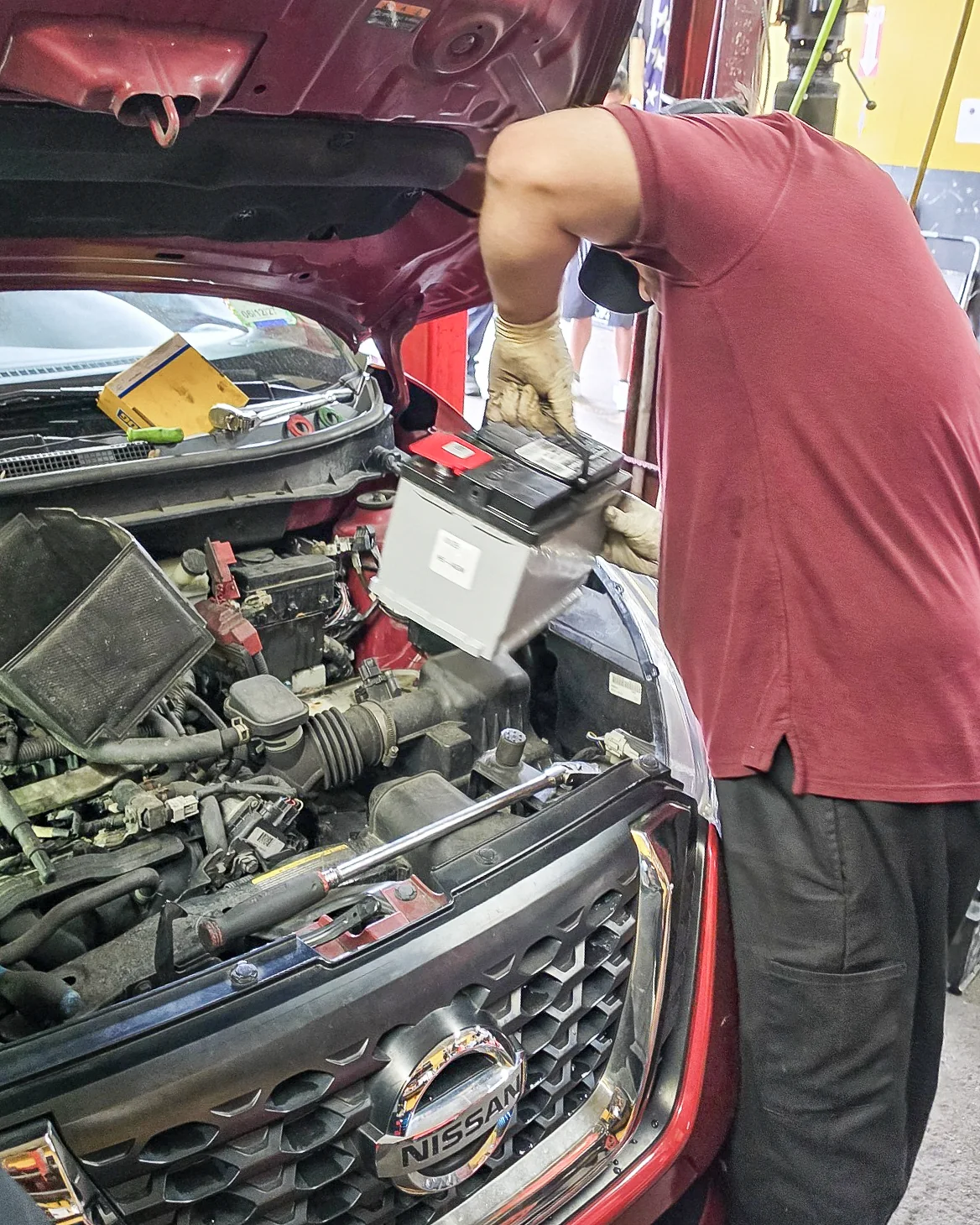
The battery stores energy to start the engine and run electronics when the engine is off. The starter turns the engine over. The alternator recharges the battery and powers the vehicle while it runs.
That division explains a common pattern: a vehicle that starts after a jump but dies later could be a charging problem rather than a battery problem, and a new battery will not solve it.
03Safe checks before you call
Only do what feels safe and stay away from moving parts:
- Are the dash lights bright, dim or completely absent when you turn the key?
- Are the battery terminals clean, dry and tight, with no white or green buildup?
- Does the vehicle behave differently in cold weather or after sitting a few days?
- Has the battery light been on, or the headlights dimming at idle?
- Is the shifter fully in Park or Neutral, and does the key or fob have normal battery?
04About jump-starting
A jump can get you moving, but it is information, not a repair. If a vehicle needs jumping more than once, something is draining or not charging, and repeat jumps put stress on other electrical parts. Note whether it started instantly on the jump or needed several minutes; that detail helps.
05How we narrow it down
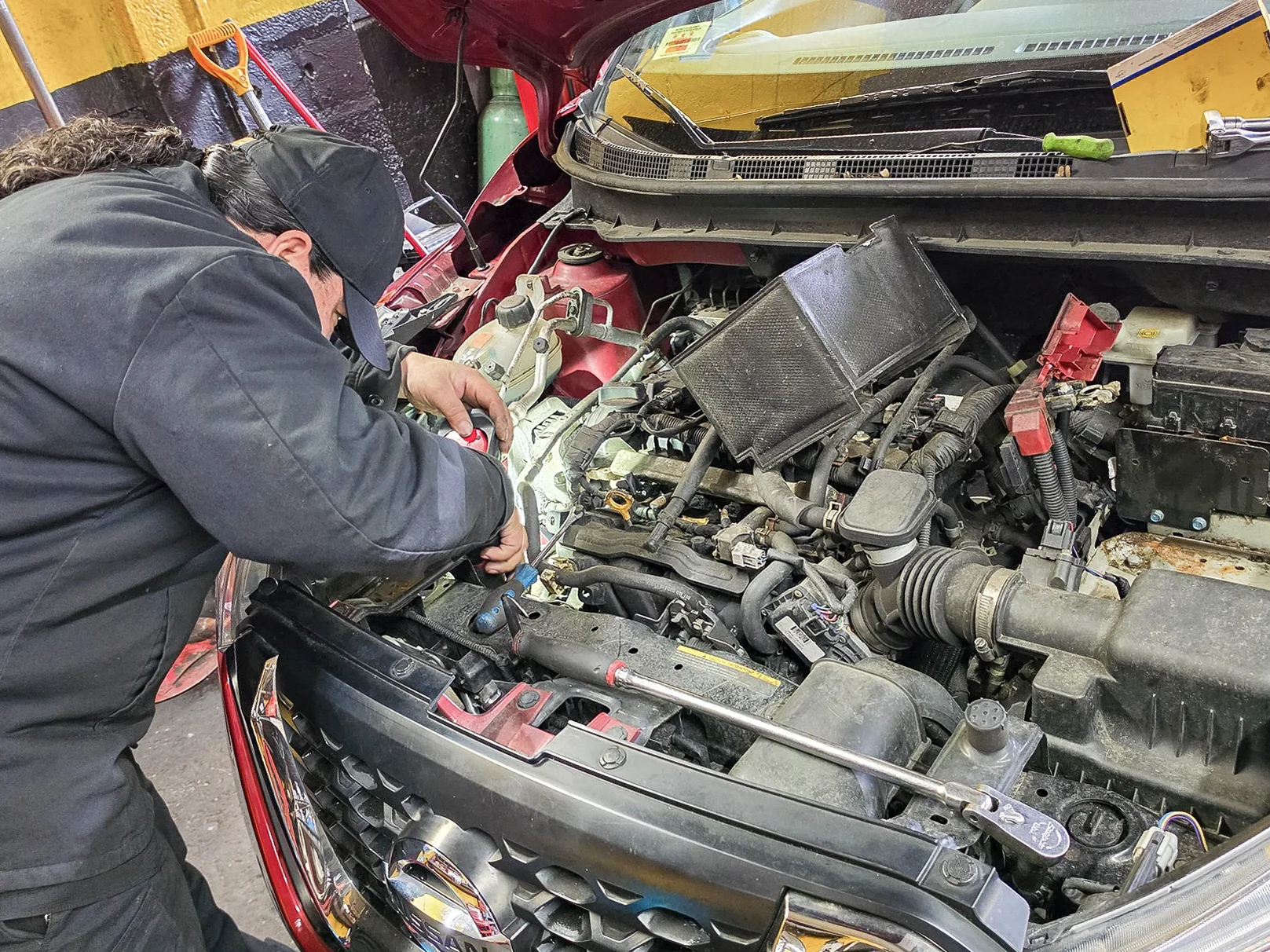
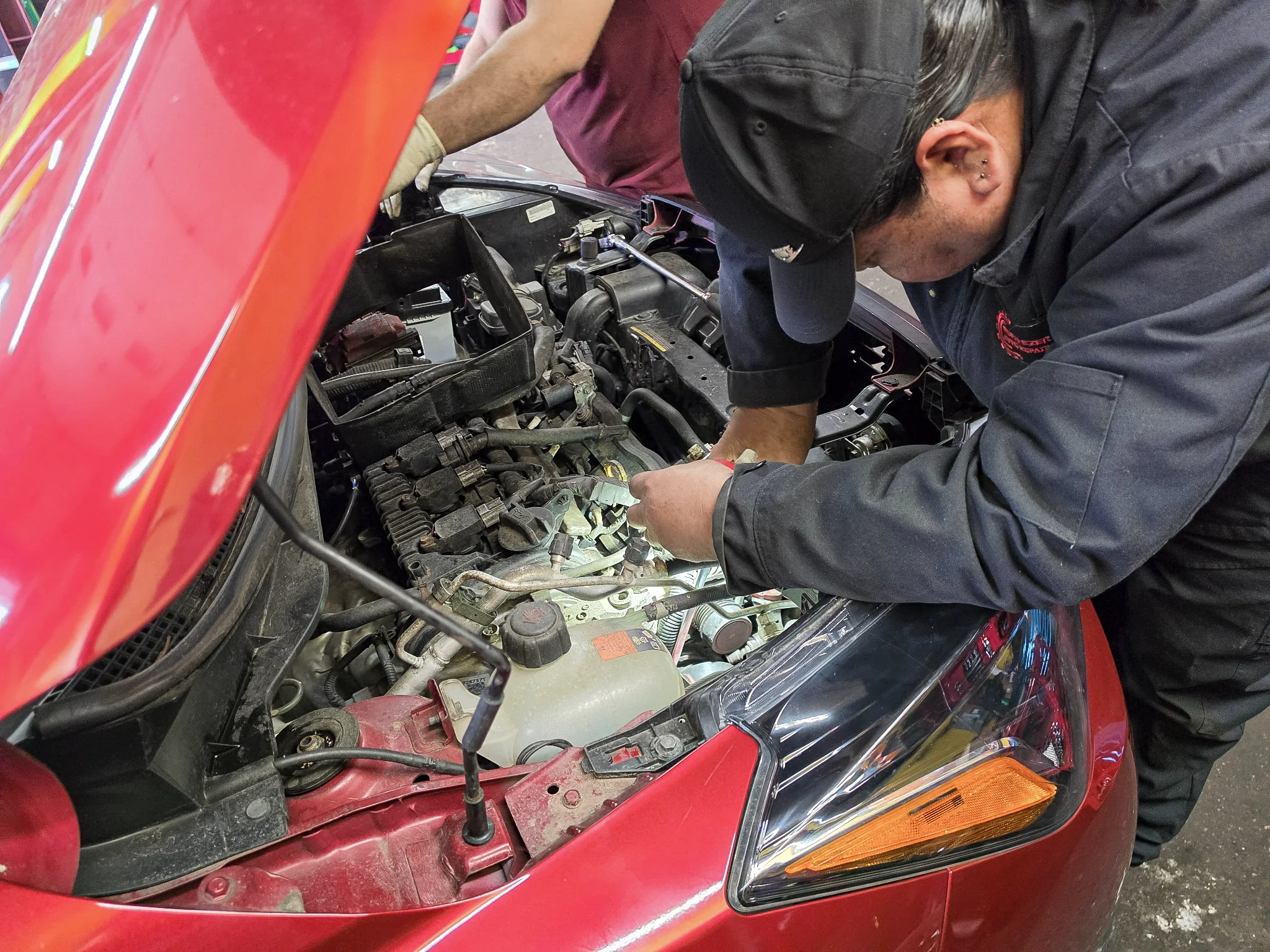
We test battery condition under load, check charging output while running, inspect cables and grounds, and look at what the starter circuit actually receives. Testing costs far less than replacing three parts in sequence.
What to tell the shop
- The exact sound: slow crank, one click, rapid clicks, cranks-no-start or silence.
- Whether dash lights are bright, dim or off.
- Whether it has needed a jump before, and how recently.
- Age of the battery, if you know, and whether the problem happens cold or after sitting.
- Whether you are stranded now — say so when you call.
Note: This article is educational. Electrical testing on your vehicle is what confirms whether the battery, starter, charging system or something else is responsible.